
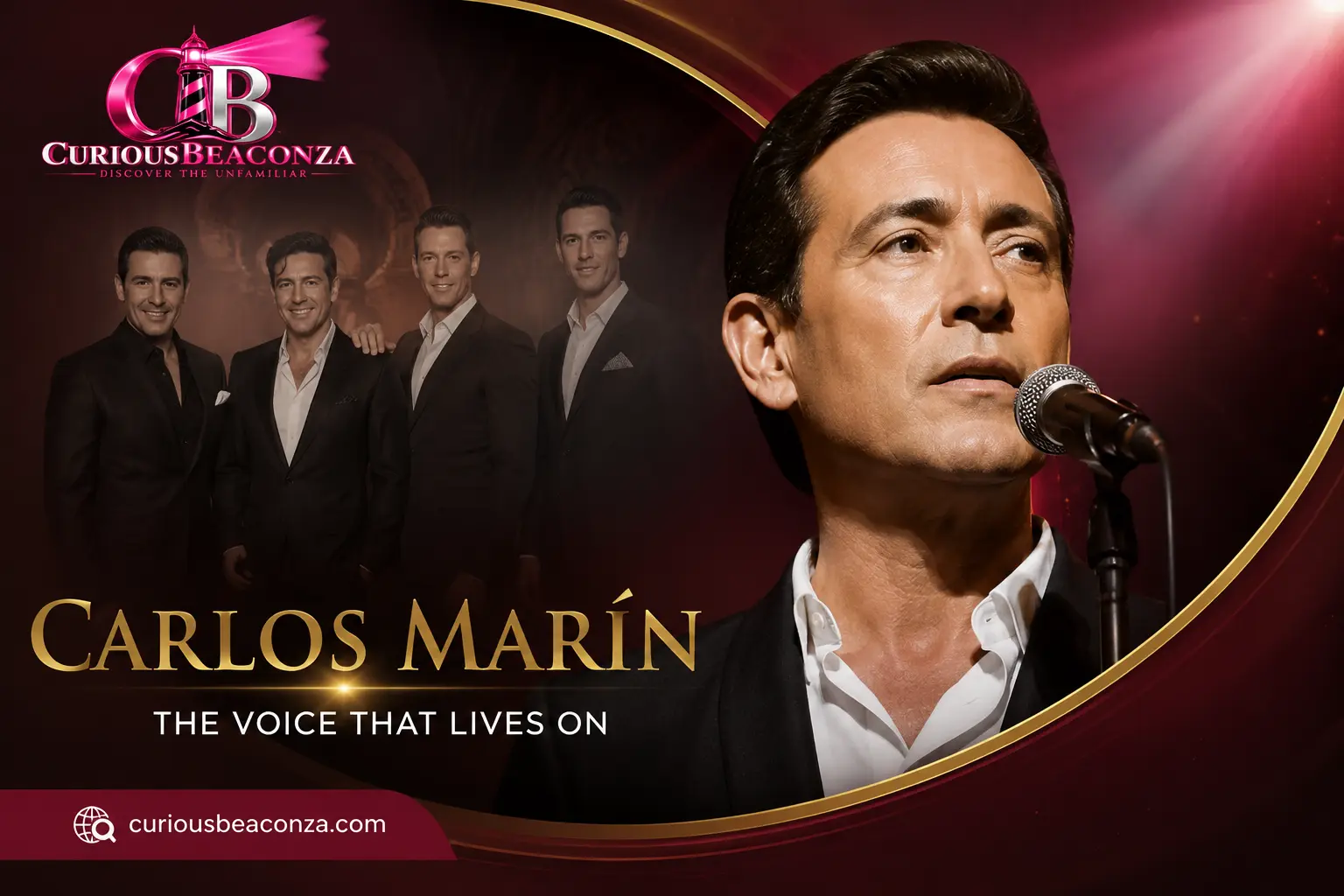
Few voices in modern music have managed to bridge the worlds of opera and pop as seamlessly as Carlos Marin did. As one of the four founding members of Il Divo, Marín helped create an entirely new musical genre often called “popera” that sold more than 30 million records worldwide and introduced millions of listeners to classical crossover music for the very first time. His rich baritone voice, coupled with an unparalleled stage presence, captivated audiences across the globe, making every performance an unforgettable experience.
Marín’s ability to convey deep emotion through his singing transcended language barriers, drawing fans from diverse backgrounds into the enchanting world of Il Divo. The group’s innovative arrangements and romantic ballads not only showcased his vocal prowess but also paved the way for a new generation of artists eager to explore the fusion of classical and contemporary music. As he continued to push artistic boundaries, Carlos Marín’s legacy remains a testament to the power of music to unite and inspire.
This article takes a deep, honest look at Carlos Marín’s life: his childhood beginnings in Germany, his rise as a musical theatre performer in Spain, his global fame with Il Divo, and the tragic circumstances of his death in 2021. Along the way, we’ll explore why his contribution to music still matters today, and why fans around the world continue searching for his story years after his passing.
Whether you’re a longtime Il Divo fan, a music history enthusiast, or someone who just heard his name for the first time, this guide is designed to give you a complete and genuinely useful picture of who Carlos Marín was and why he mattered. Carlos Marín, a charismatic baritone known for his powerful voice and passionate performances, played a pivotal role in bringing classical crossover music to mainstream audiences. His journey began in the vibrant musical landscape of Spain, where his early training laid the foundation for a career that would span decades and touch countless hearts around the world.
From his unforgettable solos to his harmonious collaborations with the other members of Il Divo, Marín’s artistic contributions transcended mere entertainment, offering a unique blend of operatic depth and popular appeal that resonated with fans across generations. As we delve deeper into his life and legacy, we’ll explore the key moments that defined his career, the challenges he overcame, and the enduring impact he left on the music industry.
Who Was Carlos Marín?
Carlos Marín Menchero was a Spanish baritone singer, born on October 13, 1968, near Rüsselsheim, Germany, to Spanish parents. His family relocated to Madrid when he was still a young boy, and it was there that his musical journey truly began. In Madrid, Carlos was immersed in a vibrant cultural scene that would shape his artistic identity, and he began taking vocal lessons at a young age. His talent quickly became evident, leading him to perform in local competitions and music festivals, where he captivated audiences with his rich, resonant voice.
As he honed his skills, Carlos developed a passion for various musical genres, from classical opera to contemporary pop, which would later define his versatile career. After completing his formal training, he joined the renowned classical crossover group Il Divo in 2003, gaining international fame and introducing his exceptional baritone to a global audience.
Long before Il Divo made him internationally famous, Carlos Marín was already something of a child star in Spain. He recorded his first album at just eight years old, performing Spanish and Italian classics, and by age ten he was appearing on national television. His early nickname, “The Little Caruso,” was a nod to the legendary Italian tenor Enrico Caruso a fitting comparison for a boy whose voice was already turning heads in the entertainment industry.
This early exposure to performance shaped the rest of his career. Instead of fading into obscurity as many child performers do, Carlos Marín used his childhood fame as a launchpad into musical theatre, film, and eventually one of the most successful vocal groups in modern history.
Early Life and Musical Beginnings
Carlos Marín’s early life is a case study in what happens when raw talent meets consistent opportunity. Growing up in Madrid, he was immersed in a culture that deeply valued music, theatre, and performance. By his teenage years, he had already won singing competitions and appeared on several Spanish television programs, including a notable performance on the children’s show La Locomotora at age ten.
As a teenager, he continued building his résumé, performing on shows like Gente Joven and slowly transitioning from child performer to serious vocalist. Interestingly, in interviews later in life, Carlos Marín noted a strange connection to Mexican superstar Luis Miguel both were discovered around the same era, and Marín was reportedly one of several young singers considered by talent scouts working with Luis Miguel’s team in Spain.
This period of his life laid the technical and emotional groundwork for what would come next: a full-fledged career in musical theatre, where his baritone voice would truly find its home. As he honed his craft through rigorous training and countless auditions, he discovered not only the power of his voice but also the profound ability to connect with audiences on an emotional level, transforming each performance into a shared experience that resonated deeply.
The Musical Theatre Years
Before most of the world knew his name, Carlos Marín had already built a respectable career in stage productions across Spain and Europe. He performed in major musical theatre productions including:
- Les Misérables
- Beauty and the Beast
- Grease
- Peter Pan
These roles were not small side projects they represented years of disciplined vocal training and stage experience that would later distinguish him from typical pop singers. Musical theatre demands precision, stamina, and range, and Carlos Marín’s ability to move fluidly between operatic technique and contemporary musical styles became one of his defining professional strengths.
This versatility is a big part of why, when producer Simon Cowell began searching for singers to form a new kind of vocal group in the early 2000s, Carlos Marín stood out immediately.
The Formation of Il Divo
In 2003, music mogul Simon Cowell set out to create a group unlike anything the mainstream music industry had seen before a “Three Tenors for the pop generation.” The result was Il Divo, a quartet made up of four singers from four different countries:
| Member | Country | Voice Type |
|---|---|---|
| Carlos Marín | Spain (born in Germany) | Baritone |
| David Miller | United States | Tenor |
| Sébastien Izambard | France | Pop Vocalist |
| Urs Bühler | Switzerland | Tenor |
This combination of nationalities and vocal styles became Il Divo’s signature. The group performed songs in multiple languages English, Spanish, Italian, French, and even Japanese blending operatic arrangements with contemporary pop production. It was a formula nobody had quite attempted at that scale before, and it worked spectacularly.
Il Divo’s self-titled debut album in 2004 was an instant commercial success, and the group went on to release ten studio albums plus a greatest hits compilation, ultimately selling more than 30 million records worldwide. Carlos Marín’s rich baritone was often the anchor of the group’s sound, providing depth and warmth beneath the tenors’ higher registers.
Carlos Marín’s Role and Vocal Style
What made Carlos Marín unique within Il Divo wasn’t just his voice it was his stage presence and his ability to make operatic singing feel emotionally accessible to a mainstream audience. Baritones are often overlooked in classical crossover music, which tends to favor soaring tenor lines, but Marín’s contribution gave Il Divo’s sound its distinctive richness and balance.
In interviews, Marín often spoke about singing as something deeply personal rather than purely technical. He once described singing as “my way of saying what I feel, my way of life,” a sentiment that reflected the emotional sincerity fans consistently praised in his performances. This authenticity, paired with formal vocal training from his theatre years, is arguably what separated Il Divo from other manufactured pop groups of the 2000s the members could genuinely sing, and Marín was a core part of that credibility.
Personal Life
Away from the stage, Carlos Marín maintained a relatively private personal life. He was in a long-term relationship with French-born singer Geraldine Larrosa, known professionally as Innocence, for more than a decade before the couple married in a surprise Disneyland-themed ceremony in California in 2006. The marriage ended in an amicable divorce in 2009.
Despite his global fame, Marín rarely courted tabloid attention, preferring to let his music and stage performances speak for him. This low-key approach to celebrity is one of the reasons his personal story often gets overshadowed by his professional achievements but it also reflects a performer who was more focused on his craft than his public image.
Illness and Death
Carlos Marín’s death in December 2021 came as a shock to fans around the world. In early December, Il Divo announced that they were postponing their UK tour due to an unspecified illness affecting Marín. Just days later, on December 16, the group confirmed he had been hospitalized in Manchester, England.
Reports indicated that Marín had been placed in a medically induced coma after his condition worsened, reportedly linked to complications from COVID-19. On December 19, 2021, Il Divo announced via social media that Carlos Marín had passed away at the age of 53.The news sent shockwaves through the music community and beyond, prompting an outpouring of tributes from fans and fellow artists alike, who celebrated Marín’s remarkable talent and his contributions to the world of classical crossover music.
Many expressed their sorrow and disbelief, recalling his powerful voice and charismatic stage presence that had captivated audiences around the globe. In the days that followed, memorials were held, and heartfelt messages flooded social media, as people shared their favorite memories and performances, ensuring that his legacy would live on in the hearts of those who adored him.
The group’s statement read, in part, that there would “never be another voice or spirit like Carlos,” reflecting the deep bond formed over nearly two decades of touring and recording together. Tributes poured in from fans, fellow musicians, and Simon Cowell himself, who publicly expressed his devastation at the loss.
Legacy: Why Carlos Marín Still Matters
More than three years after his passing, Carlos Marín’s influence on classical crossover music remains significant. Here’s why his legacy continues to resonate:
- He helped legitimize classical crossover as a genre. Before Il Divo, “popera” was a niche concept. Marín and his bandmates proved it could achieve massive commercial success.
- He represented the baritone voice in a genre dominated by tenors. His contribution broadened the emotional and tonal range of the group’s music.
- He bridged cultures. As a German-born Spaniard performing in five languages, Marín embodied the international spirit that made Il Divo unique.
- His stage discipline set a standard. Years of musical theatre experience gave him and by extension, the group a level of vocal professionalism that helped the act endure for nearly two decades.
Il Divo has continued performing as a trio since Marín’s passing, often dedicating portions of their shows to his memory. Fans who attend these tributes frequently describe an enduring emotional connection to his voice, a testament to how deeply his performances resonated during his lifetime.
Frequently Asked Questions About Carlos Marín
Who was Carlos Marín?
Carlos Marín was a Spanish baritone singer best known as a founding member of the classical crossover group Il Divo, formed in 2003 by Simon Cowell.
When did Carlos Marín die?
Carlos Marín passed away on December 19, 2021, at the age of 53, following complications related to COVID-19.
What was Carlos Marín’s voice type?
He was a baritone, which gave Il Divo’s music its distinctive lower register and vocal depth compared to typical tenor-driven pop groups.
Was Carlos Marín famous before Il Divo?
Yes. He recorded his first album at age eight and performed in major musical theatre productions such as Les Misérables and Grease before joining Il Divo in 2003.
Final Thoughts
Carlos Marín’s story is ultimately one of consistency and passion a performer who began singing as a child and never stopped, evolving from a Spanish television novelty act into a genuine global music icon. His voice helped define an entire genre, and his early passing left a gap in classical crossover music that fans still feel today. Carlos’s journey was marked by relentless dedication and an unyielding love for his craft, which resonated deeply with audiences around the world.
His collaborations with other artists not only showcased his versatility but also brought classical music to new and diverse listeners, bridging the gap between traditional and contemporary sounds. As a member of Il Divo, he helped to redefine popular perceptions of opera, proving that it could be both accessible and commercially successful. Even after his death, his legacy endures, inspiring a new generation of artists to pursue their passions fearlessly and reminding fans of the power of music to transcend boundaries.
For anyone discovering his story for the first time, the takeaway is simple: Carlos Marín wasn’t just a member of a successful pop group he was a trained, disciplined artist whose baritone voice gave Il Divo the emotional foundation it needed to become one of the best-selling vocal groups in history. His journey began long before Il Divo graced the world’s stages, rooted in a deep passion for music that was nurtured through rigorous vocal training and performance experience.
Carlos’s dedication to his craft was evident not only in his technical prowess but also in his ability to connect with audiences on a profound emotional level. Each note he sang resonated with authenticity, drawing listeners into a world where every lyric felt like a shared experience. As the group soared to international fame, it became clear that Carlos was not merely a performer; he was a bridge between classical and contemporary music, making opera accessible to a new generation and redefining the boundaries of pop music.
Read Also: James Caan Five Children Explained: The Fascinating Family Story
[…] Read Also: Carlos Marin: The Powerful Story of Il Divo’s Unforgettable Voice […]